Key points
- Require clear acceptance criteria and a recoverable failure path.
- Agree on source ownership, credentials and support before handover.
Procurement guide. A useful implementation proposal should explain how work will be accepted and what happens when the system fails. This article offers selection questions, not a ranking of providers.
Request a bounded first deliverable
Describe one business process, the systems it touches and the evidence required for acceptance. Ask the prospective partner to show which parts are deterministic software, which rely on a model and where a person remains responsible.
A proposal should also state exclusions. If the system drafts a response but does not verify the underlying account data, the handover should say so. Otherwise a buyer may assume a broader capability than the project delivers.
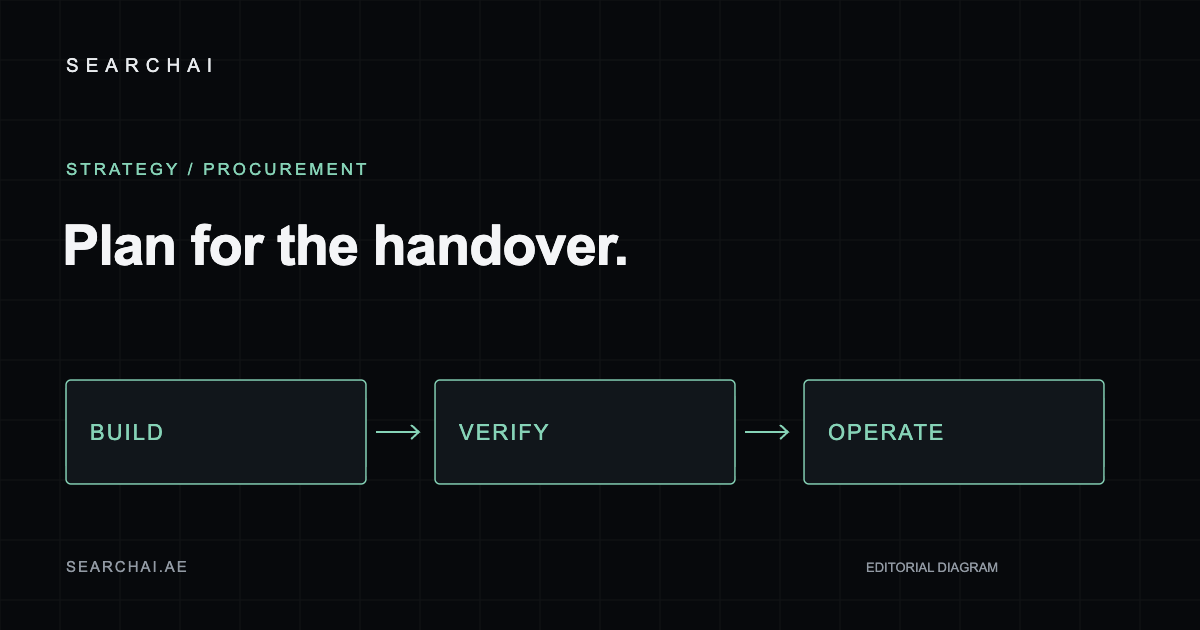
Make the handover concrete
- Who owns the source code and configuration?
- Can you change model providers without rebuilding the entire process?
- Where are credentials stored, and how are they revoked?
- Who pays for retries, monitoring and maintenance?
- Can the service be paused without losing unfinished work?
Test the failure path
Our recommendation is to include an unavailable dependency, malformed input and a rejected action in the acceptance demonstration. Require a visible explanation of what happened and a recoverable next step. A successful happy-path run is only part of the handover.
Compare proposals against the same requirements rather than against the number of AI features listed. For measurement, see how to evaluate an AI pilot; for the autonomy decision, see agent or workflow.
Relationship disclosure: SearchAI’s website is powered by WAIM. This guide is not an independent rating or endorsement of WAIM or any other provider.

AI-assisted technology coverage, explainers and practical guides. Sources and publication standards are described in our editorial policy.
All stories by this author